
Professional LinkedIn & Corporate Headshot Prompts: Studio Backgrounds & Executive Poses
Create studio-quality LinkedIn headshots and executive portraits using AI prompts. Master corporate lighting setups, suit and blazer textures, approachable poses, and modern office backgrounds in Midjourney, Flux, and Gemini.
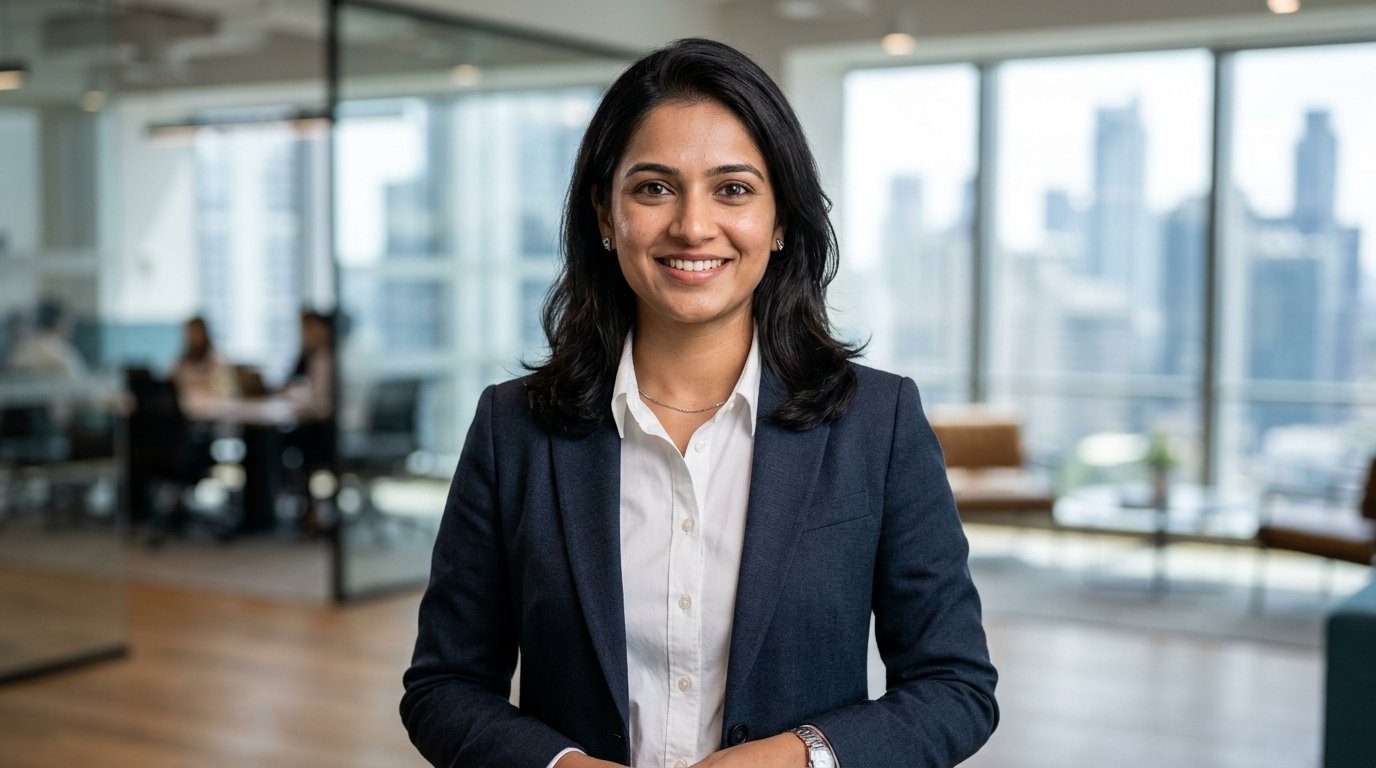
In the modern digital economy, your corporate headshot is your virtual handshake. Whether you are updating your LinkedIn profile, pitching investors, publishing guest editorials, or appearing on your company’s leadership page, a polished, authoritative portrait instantly signals competence, trustworthiness, and executive presence. Yet, hiring a professional commercial studio photographer, booking makeup artists, and renting studio space often costs between $300 and $1,500—an expense and scheduling barrier that many professionals and early-stage founders cannot justify.
The rapid maturation of generative AI models like Midjourney v6.1, Black Forest Labs' Flux.1, and Google Gemini (Imagen 3) has democratized executive portraiture. However, achieving a believable, high-trust corporate headshot is far more nuanced than typing 'professional man in suit' or 'business woman smiling.' Vague instructions consistently yield caricatured avatars with plastic skin, oversaturated blue studio backdrops, unnaturally bleached teeth, or stiff mannequin postures that scream 'fake AI profile.'
Real executive photography is governed by strict physical principles: flattering optical compression from telephoto portrait lenses (85mm or 105mm), subtle 3:1 lighting ratios that sculpt the jawline without creating dramatic film noir shadows, tactile fabric micro-textures in wool and cotton weaves, and authentic dermal micro-pores with natural specular sheen. When you know how to translate these physical photographic parameters into prompt syntax, generative models produce headshots that rival images shot in high-end Manhattan or London photo studios.
This masterclass guide breaks down the precise prompt architecture required to generate studio-grade corporate portraits. You will learn the exact terms for professional wardrobe styling, facial poses, corporate backdrops, and tested copy-and-paste formulas tailored for tech executives, finance professionals, consultants, and creative leaders.
The anatomy of an executive headshot: Credibility vs warmth
Corporate headshot psychology balances two visual cues: competence (authority, intellect, focus) and warmth (approachability, empathy, collaborative readiness). Over-indexing on competence produces cold, unapproachable portraits with intense squinting and stiff postures. Over-indexing on warmth can produce overly casual lifestyle photos that look out of place on an executive bio page. In prompt engineering, this balance is governed by three interconnected elements: 1. Eye direction and catchlights: Direct eye contact with the lens paired with dual softbox catchlights in the upper iris creates direct engagement. 2. Subtle micro-expressions: Replace 'smiling happily' with 'approachable, confident executive micro-smile with relaxed eyes.' 3. Head tilt: Keep the head level or tilted at an imperceptible 2-degree angle; extreme tilts convey submissiveness or flirtation rather than corporate steadiness.
Corporate lighting science: The 3:1 diffused softbox setup
Unlike cinematic film portraits that thrive on dramatic chiaroscuro and 8:1 shadow ratios, corporate photography requires clean, even illumination with gentle shadow sculpting. The standard setup is a 3:1 ratio: 1. Key Light: A large 120cm octabox softbox positioned 45 degrees to the subject's left or right, elevated slightly above eye level. 2. Fill Light: A reflective white bounce card or secondary soft light on the opposite side to lift shadows while preserving cheekbone contours. 3. Hair / Kicker Light: A dedicated rim light placed behind the subject to trace the crown of the hair and shoulders, carving the figure away from dark backgrounds. In prompts, specify: 'professional corporate 3-point studio lighting, diffused octabox key light, gentle 3:1 shadow ratio, subtle hair separation backlight, crisp specular catchlights in pupils.'
Wardrobe and textile mechanics: Blazers, weaves, and color psychology
AI models often default to cheap, shiny polyester rendering unless you specify fabric materiality. Real high-end business attire relies on matte, textured natural fibers: 1. Suiting Fabrics: Prompt for 'matte Italian worsted wool blazer,' 'charcoal herringbone textured fabric,' or 'subtle pinstripe structured tailored suit.' 2. Shirt & Collar: Specify 'crisp white cotton poplin collared shirt with structured collar points' or 'merino wool mock-neck knit under an unbuttoned sport coat' for modern tech elegance. 3. Executive Color Palette: Stick to authoritative neutrals: deep midnight navy (trust, loyalty), charcoal slate (modern stability), crisp optic white (clean precision), and soft warm camel or heather gray (contemporary accessibility). Avoid neon tones, glossy satins, or loud distracting patterns.
Background environments: Seamless studio paper vs architectural bokeh
Your choice of backdrop frames the narrative of your industry: 1. Minimal Studio Seamless: Ideal for formal corporate directories, law firms, and finance. Specify 'clean neutral light-gray seamless cyclorama studio paper background with subtle radial gradient falloff.' 2. Modern Glass Architectural Office: Favored by tech founders, venture capitalists, and consultants. Specify 'blurred background of a modern glass office interior, floor-to-ceiling windows with diffused daylight, soft neutral architectural bokeh, shallow depth of field.' 3. Executive Boardroom: Warm wood tones and leather accents: 'subtle warm bokeh of a corporate boardroom with walnut paneling and soft pendant lighting, 85mm f/1.8 background blur.'
Camera optics and focal length: Why 85mm is non-negotiable
Wide-angle lenses (24mm, 35mm, or smartphone cameras) distort human facial anatomy when used close-up, ballooning the nose and tapering the ears. Professional portrait photographers use 85mm or 105mm prime lenses because they provide optical compression: the facial features look proportionate, the jawline appears sharp and structured, and the background is compressed into smooth, non-distracting blur. In your prompt, always specify: 'medium-close portrait framing, chest up, 85mm f/1.8 prime lens photography, shallow depth of field, sharp focus on subject eyes and face.'
Eliminating the synthetic 'AI sheen': Skin pores, grooming, and realism
The primary reason AI headshots look fake is artificial skin smoothing and perfect dental symmetry. To ground the portrait in physical reality: 1. Micro-Texture: Add 'authentic skin pores, natural skin texture with subtle fine lines, matte complexion with realistic subsurface scattering, no beauty filter.' 2. Natural Grooming: Specify 'neatly trimmed groomed facial hair' or 'clean professional hair with subtle flyaway stray hairs catching rim light.' Adding slight natural imperfection signals to diffusion models that the image is a photograph rather than an idealized 3D render.
Tested Copy-and-Paste Corporate Prompt Formulas
Formula 1 — Modern Tech Founder / Executive (Midjourney / Flux): 'Executive corporate headshot of a confident 32-year-old Indian tech founder, wearing a tailored charcoal-navy blazer over a crisp open-collar white shirt. Approachable calm smile, engaging eye contact, natural skin pores and realistic skin texture with zero plastic sheen. Softly blurred contemporary glass office background with modern architectural lines, professional 85mm f/1.8 lens portrait, studio softbox lighting with subtle hair rim light, crisp catchlights in eyes, photorealistic --ar 16:9 --style raw.' Formula 2 — Finance & Consulting Partner (Gemini Imagen 3 / Flux): 'A professional studio headshot of a polished 38-year-old corporate director, wearing a bespoke dark slate-gray wool business suit and subtle silk tie. Confident composed expression, structured jawline, sharp eye focus. Clean neutral light-gray studio backdrop with gentle gradient falloff. Commercial studio 3-point lighting setup, soft diffused shadows, high-end commercial editorial photography, medium close-up composition.' Formula 3 — Creative Director / Modern Professional: 'Warm editorial headshot of a 29-year-old female creative executive wearing an elegant black cashmere turtleneck and minimalist gold hoop earrings. Approachable confident micro-smile, glowing natural skin with authentic micro-texture. Warm sunlit Scandinavian office studio with soft architectural bokeh in background, 85mm lens, natural daylight diffusion.'
Model benchmark: Which AI tool generates the best business headshots?
1. Flux.1 (Dev): Currently the premier choice for photorealistic business headshots. It excels at fine fabric weaves (wool lapels, cotton stitching), natural finger positioning, and authentic skin pores without default beauty-filter smoothing. 2. Midjourney v6.1: Delivers the most cinematic color grading and sophisticated hair rendering, but requires '--style raw' and specific negative prompting to avoid the signature glossy 'Midjourney glamor' finish. 3. Google Gemini (Imagen 3): Exceptional at generating natural, trustworthy facial expressions and culturally authentic diverse skin tones with zero prompt fatigue.
LinkedIn profile optimization: Sizing, cropping, and contrast checks
Once you generate your image, consider how it displays on mobile devices: 1. The Circular Crop Test: LinkedIn crops portraits into a circle. Keep the subject's face centered with ample breathing room above the hair so the top of the head is not cut off. 2. High Contrast at Thumbnail Size: Your photo appears as a 48x48 pixel circle in LinkedIn feeds. Ensure sufficient contrast between your blazer and the background so your silhouette pops instantly on small smartphone screens.
Frequently Asked Questions
What is the best prompt for a LinkedIn profile picture?
The most effective prompt combines attire, lighting, lens, and expression: 'Professional corporate headshot of a confident executive wearing a tailored navy blazer and crisp white shirt, warm approachable smile, 85mm lens, diffused studio softbox lighting, neutral modern office bokeh background, authentic skin pores.'
How do I prevent AI business headshots from looking fake or plastic?
Avoid words like 'hyperrealistic,' 'perfect,' or '8K.' Instead, specify physical camera and skin terms: '85mm f/1.8 lens portrait, authentic skin texture with natural pores, subtle fine lines, matte skin finish, no beauty filter.' In Midjourney, always use '--style raw.'
What background works best for professional AI headshots?
For traditional corporate, legal, or finance roles, use a 'neutral light-gray seamless studio paper background.' For tech, startups, and creative leadership, use an 'architectural blurred modern glass office interior with soft natural bokeh.'
Can AI generate corporate headshots that match my real face?
Yes, tools like Flux.1 and Midjourney with Character Reference (--cref) can maintain facial resemblance when supplied with high-resolution, unedited reference portraits. Providing multiple reference angles yields the highest identity consistency.
What clothing should I prompt for an executive portrait?
Stick to structured natural fabrics: 'tailored matte worsted wool blazer,' 'crisp white cotton poplin collared shirt,' or 'fine merino wool knit.' Choose authoritative neutral colors like midnight navy, charcoal gray, or optic white.
Put an idea into words.
Find a prompt, change a detail, and explore a new direction.
Explore prompts →