
Mastering Studio & Cinematic Lighting Prompts: Softbox, Rim, Rembrandt & Golden Hour
Master studio and cinematic lighting in AI photo prompts. Learn how softbox diffusion, rim lighting, Rembrandt triangles, chiaroscuro, and golden hour transform flat portraits into Hollywood-grade imagery in Midjourney, Google Gemini, and Flux.
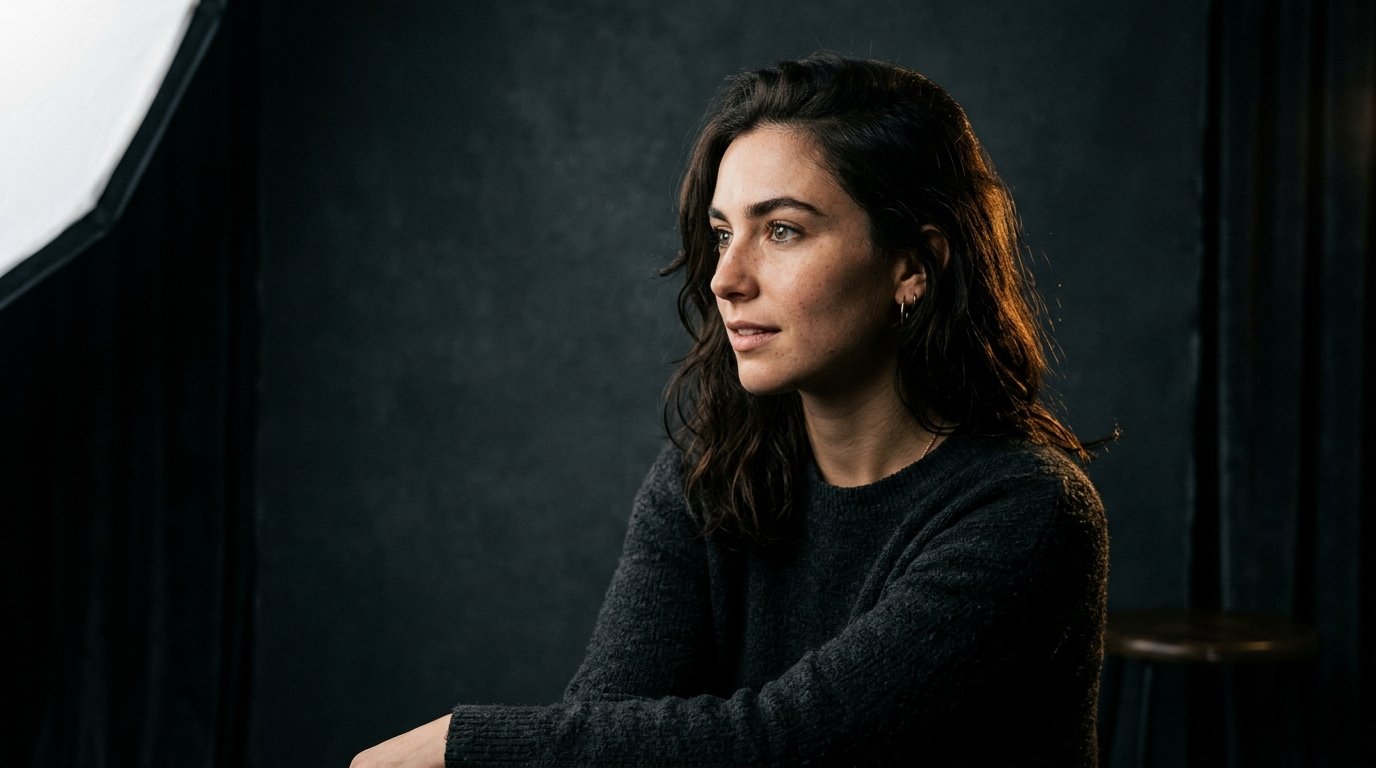
Light is the fundamental medium of photography. In traditional portraiture, an experienced photographer does not simply aim a camera at a subject and press the shutter; they sculpt shadows, define contours, control contrast ratios, and direct the viewer's gaze through deliberate illumination. In generative AI photography, light plays an even more profound role. Without clear lighting instructions, generative models like Midjourney v6.1, Google Gemini (Imagen 3), and Flux.1 default to flat, ambient illumination or aggressive cosmetic smoothing that gives human skin an artificial, plastic look.
Many prompt creators attempt to fix dull images by piling on generic quality buzzwords such as 'hyperrealistic,' 'masterpiece,' '8K resolution,' or 'unreal engine render.' These descriptors fail because they do not communicate physical properties to the model's neural network. Modern AI image models are trained on millions of professionally curated photographs tagged with real technical metadata. When you replace vague descriptors with authentic lighting setups—such as 'large diffused octabox key light,' 'subtle warm golden rim light,' or 'dramatic chiaroscuro'—the AI model instantly accesses photographic training weights that govern realistic light falloff, specular reflections, subsurface scattering, and volumetric depth.
Whether you are crafting high-fashion studio portraits, intimate bridal captures, moody cyberpunk street scenes, or professional corporate headshots, mastering lighting prompt terminology gives you absolute creative command over your image's atmosphere. This comprehensive guide breaks down the physical principles, camera terminology, copy-and-paste prompt formulas, and troubleshooting techniques needed to achieve masterclass lighting in your AI photography workflow.
Why lighting is the defining element of photorealism
In physical photography, illumination determines three vital visual attributes: form, texture, and mood. Form is revealed through the transition between light and shadow (known as modeling), which turns a flat two-dimensional sensor image into a convincing three-dimensional figure. Texture—whether the delicate weave of silk fabric, pores on human skin, or rain droplets on asphalt—is accentuated by raking side light or softened by direct frontal diffusion. Mood is governed by lighting ratios and color temperature. In AI generation, specifying lighting prevents the model from generating homogeneous, lifeless renders. When you explicitly dictate the light source, direction, hardness, and color temperature, the AI synthesizes physically plausible shadows and authentic highlight roll-off that mimic real camera sensors.
The classic three-point lighting setup in AI prompts
The three-point lighting setup is the cornerstone of Hollywood cinematography and professional studio portraiture. It consists of three distinct light sources: the Key Light (the primary, brightest illuminator that shapes the subject), the Fill Light (a secondary, softer source that lifts shadows on the opposite side without creating competing shadows), and the Backlight or Rim Light (placed behind the subject to trace the edges of the hair and shoulders, carving the figure away from the background). In AI prompts, you can call out this setup directly: 'professional 3-point studio lighting, dominant key light from the left at 45 degrees, subtle 4:1 fill light ratio preserving natural shadow depth, delicate kicker backlight on shoulders.' This structure tells the generative model to establish coherent directional illumination rather than generic illumination.
Understanding lighting ratios: 2:1 vs 4:1 vs 8:1
Lighting ratio describes the relative brightness between the illuminated key side of a face and the shadowed fill side. A 2:1 ratio (where the key light is only twice as bright as the fill) produces high-key, low-contrast illumination commonly seen in commercial beauty, cosmetic ads, and upbeat lifestyle photos. A 4:1 ratio represents standard portrait lighting, creating gentle depth and flattering cheekbone definition while retaining clear detail in the shadows. An 8:1 or 16:1 ratio produces low-key, dramatic, high-contrast illumination with deep, velvety shadows suitable for film noir, suspenseful character portraits, and intense fine-art photography. Prompting these ratios directly—for instance, 'dramatic 8:1 lighting ratio with deep cinematic shadows'—instructs the AI to maintain rich contrast rather than artificially brightening dark areas.
Softbox and diffused lighting: The secret to flawless skin texture
Hard, direct lighting produces sharp, unforgiving shadow edges that can exaggerate facial imperfections and create harsh hot spots on foreheads and noses. Conversely, softbox lighting utilizes large diffusion baffles—such as parabolic umbrellas or hexagonal octaboxes—to create a broad, gentle light source that wraps around the human face. In AI generation, prompting for 'diffused softbox lighting' or 'large octabox soft light' prevents the model from generating harsh white patches while maintaining crisp iris reflections and authentic, soft micro-pore transitions. It is particularly effective for beauty editorials, corporate headshots, and wedding portraits where smooth, flattering skin tones are essential.
Rim light and kicker light: Carving subjects out of the dark
A common flaw in dark or moody AI portraits is the subject blending awkwardly into the backdrop, losing hair separation and shoulder outlines. Rim lighting—also known as edge lighting, hair lighting, or kicker lighting—places a bright, focused source behind or beside the subject. This creates a fine luminous halo along the hair, jawline, and shoulders, cleanly separating the subject from a dark or complex background. In your prompts, specify: 'strong golden rim light outlining hair and jawline, sharp edge separation against a dark slate studio wall.' Rim light instantly introduces cinematic production value and adds tangible three-dimensional depth to any portrait.
Rembrandt lighting: The cinematic triangle of classical art
Named after the Dutch master painter Rembrandt van Rijn, Rembrandt lighting is one of the most recognizable and revered lighting patterns in photography. It is characterized by an illuminated upside-down triangle of light on the shadowed cheek beneath the eye. Created by positioning a key light high and at approximately 45 degrees to the subject, Rembrandt lighting creates subtle drama, facial slimming, and timeless aesthetic dignity. In AI image generators, use the prompt keyword 'Rembrandt lighting, distinctive illuminated cheek triangle on shadow side, 45-degree high key light, rich painterly chiaroscuro.' Midjourney, Gemini, and Flux all recognize this art-history token and will position the key shadow and cheek highlight with striking optical precision.
Split lighting: Ultimate contrast, mystery, and character study
Split lighting occurs when the key light is placed directly at 90 degrees to the side of the subject, illuminating exactly half of the face while leaving the other half plunged into complete darkness. This extreme form of side lighting is intensely dramatic and emphasizes facial bone structure, rugged skin texture, and brooding psychological tension. It is ideal for dramatic character portraits, detective noir scenes, musicians, or gritty athletic photography. To prompt this look, write: 'strict split lighting, 90-degree lateral side light, half the face brightly lit, half the face concealed in pure deep shadow, high-contrast black and white photography, dramatic mood.'
Butterfly (Paramount) lighting: High-fashion glamor and beauty symmetry
Pioneered in classic Hollywood cinema by Paramount Pictures to photograph stars like Marlene Dietrich and Audrey Hepburn, Butterfly lighting (also known as Paramount lighting) places the key light directly above and slightly in front of the subject's face. This creates a small, symmetrical butterfly-shaped shadow immediately below the nose and sculpts elegant hollows under the cheekbones. In AI generation, Butterfly lighting produces symmetrical, high-fashion beauty portraits that emphasize makeup, cheekbones, and flawless facial balance. Pair it with phrases like 'paramount beauty lighting, symmetrical butterfly shadow beneath nose, high key overhead beauty dish, radiant eye catchlights.'
Golden Hour: Warm low-angle sunlight and romantic radiance
Golden hour occurs during the last hour before sunset and the first hour after sunrise, when the sun is positioned low on the horizon. The light travels through more of the Earth's atmosphere, scattering harsh blue wavelengths and leaving rich warm amber, gold, and terracotta tones (roughly 3000K to 3500K). In AI photo generation, golden hour produces long, romantic shadows, warm skin illumination, and luminous backlighting with natural lens flares. To maximize golden hour realism, prompt: 'authentic golden hour sunlight, low sun angle at 15 degrees, warm amber backlighting with delicate atmospheric haze, glowing sun-kissed hair edges, natural lens flare, 85mm f/1.4 lens.'
Blue Hour and twilight: Cool cinematic melancholy
Occurring just after the sun dips below the horizon or right before dawn, blue hour bathes the landscape in deep indigo, cobalt, and cyan hues (7000K to 9000K). The light is completely diffused, shadowless, and cool, providing an emotional counterpoint to the warmth of golden hour. Blue hour is extraordinarily powerful when paired with warm artificial practical lights (like street lamps, neon signs, or candle flame), creating a striking warm-and-cool complementary contrast. An effective prompt: 'blue hour twilight street portrait, cool deep indigo sky, soft ambient dusk light, contrasted by warm tungsten streetlight glowing on one side of face, 35mm documentary photography.'
Volumetric lighting and atmospheric haze: The 'God Rays' effect
Volumetric lighting occurs when light rays pass through atmospheric particles such as mist, dust, incense smoke, or coastal fog, making the light beams physically visible as rays (the Tyndall effect). In cinema and digital photography, volumetric rays create an immediate sense of scale, atmosphere, and cinematic gravity. When prompting for volumetric light, describe the atmospheric medium that catches the light: 'strong sunlight filtering through antique wooden jali screens, visible volumetric light beams, suspended dust particles in the air, dramatic sun shafts, atmospheric haze.' Avoid writing simply 'god rays'; grounding the light in dust, fog, or morning mist produces significantly more realistic results in both Flux and Midjourney.
Chiaroscuro: Renaissance master painting meets modern AI photography
Originating in the Italian Renaissance and popularized by Caravaggio, Chiaroscuro (literally 'light-dark') is the bold use of strong contrasts between light and dark, usually affecting a whole composition. Unlike flat modern lighting, chiaroscuro uses darkness not merely as an absence of light, but as an active compositional tool that wraps around the subject. In AI prompts, combining 'chiaroscuro lighting' with 'dark painterly background' and 'directional single-source illumination' instructs the model to produce rich, velvety black tones (crushed blacks) and intense, focused highlights that evoke fine-art museum oil paintings.
Two-tone gel lighting: Cyberpunk, neon glow, and high-fashion dynamism
Color gel lighting involves placing colored translucent filters over studio flashes to bathe the subject in vibrant, saturated hues. Combining complementary colors—such as neon magenta and electric cyan, or warm amber and deep cobalt—creates electrifying color contrast that is synonymous with cyberpunk aesthetics, music album covers, and contemporary editorial fashion. In prompts, specify the placement of each color: 'dual-tone color gel lighting, saturated magenta key light from the left side, complementary teal rim light along the right profile, deep shadows, glossy skin highlights, cyberpunk editorial aesthetic.'
Color temperature (Kelvin) and white balance in prompts
Light is measured in Kelvin (K) on a color temperature scale ranging from warm candle flame (1800K) to cool northern sky daylight (10,000K). Generative models understand technical Kelvin values and color names with remarkable precision. Specifying 'warm 2700K tungsten illumination' triggers cozy, domestic, golden indoor tones. Specifying 'neutral 5500K daylight balanced strobe' creates crisp, clean commercial catalog portraits without any color cast. Specifying 'cool 7500K overcast light' introduces subdued, overcast, moody Scandinavian tones. Adding a specific Kelvin number to your prompt eliminates unexpected color shifts in AI generation.
Practical lights and environmental illumination
In filmmaking, practical lights are visible light sources within the scene itself—such as table lamps, candles, Diwali diyas, neon shop signs, car headlights, or smartphone screens. Prompting practical lights grounds your AI photograph in physical reality, because the generative model calculates how that specific visible source casts light onto nearby skin and clothing. For example: 'candid portrait of a woman reading in a dark room, illuminated solely by the warm flickering glow of a single brass oil lamp (diya) held in her hands, realistic specular eye catchlights, deep atmospheric darkness.'
Cross-model lighting guide: Midjourney vs Gemini Imagen 3 vs Flux.1
Different AI engines interpret lighting instructions with distinct biases. **Midjourney v6.1** tends to over-dramatize lighting by default; to get natural results, pair your lighting terms with `--style raw` and keep descriptions concise. **Google Gemini (Imagen 3)** excels at natural daylight, golden hour, and cultural lighting scenarios (like festive lanterns and sunlight through courtyards); write in full descriptive sentences focusing on warmth and ambient environment. **Flux.1 (Dev & Schnell)** has the most physically accurate sensor simulation of all three models; it responds best to precise technical terminology like 'diffused softbox,' 'fresnel spot,' 'specular highlights,' and exact lighting ratios.
Copy-and-paste cinematic lighting prompt formulas
Here are four battle-tested lighting formulas you can adapt directly for your projects: 1. **Corporate Studio Executive Headshot**: 'Professional waist-up portrait of a corporate executive, captured with an 85mm f/1.4 lens, large 47-inch octabox key light at 45 degrees, subtle silver reflector fill light, clean white hair kicker light separating subject from a textured slate-grey backdrop, balanced 5500K studio strobe, natural skin pores.' 2. **Dramatic Rembrandt Fine Art**: 'Close-up portrait of an elderly craftsman, deep eye contact, authentic Rembrandt lighting with a sharp luminous triangle on the shadowed cheek, single directional warm tungsten light source, rich dark chiaroscuro background, 85mm portrait photography, textured skin.' 3. **Golden Hour Bridal Editorial**: 'Full-length portrait of an Indian bride in an ornate crimson lehenga, standing in an ancient sandstone palace courtyard, low 15-degree golden hour sun behind her creating glowing translucent dupatta edges, soft warm rim light, gentle ambient fill light, 50mm f/1.8 lens, cinematic color grading.' 4. **Cyberpunk Neon Street**: 'Waist-up street portrait of a cyberpunk character standing in a rain-soaked Tokyo alleyway, illuminated by neon sign reflections, vibrant cyan key light from shop window, harsh magenta rim light along shoulder, wet asphalt reflections, volumetric street steam, 35mm f/1.4.'
Five critical lighting mistakes to avoid in AI prompts
1. **Conflicting light directions**: Prompts like 'bright overhead noon sunlight and romantic sunset glow' force the model to hallucinate bizarre, impossible shadow angles. Choose a single coherent time of day. 2. **Overloading lighting buzzwords**: Writing 'cinematic studio softbox neon rim dramatic bright chiaroscuro' confuses the model's neural attention weights. Pick one primary style and one secondary accent. 3. **Forgetting shadows**: High photorealism requires deep, believable shadows. If you do not specify shadow depth or contrast, the AI will default to flat, washed-out HDR lighting. 4. **Ignoring eye catchlights**: The hallmark of genuine portraiture is the catchlight—the reflection of the light source in the subject's iris. Always include 'natural catchlights in pupils' for lifelike gaze. 5. **Neglecting the background light relationship**: Ensure the subject's lighting matches the background environment; a subject lit by warm golden hour placed against a cool blue neon street will look like a poorly composited sticker.
Frequently Asked Questions
What is the best lighting prompt for realistic AI portraits?
The most reliable prompt for realistic AI portraits is 'diffused softbox key light at 45 degrees with a subtle rim light and natural catchlights in the pupils.' This mimics a professional studio setup, creating flattering facial depth, authentic skin pores, and clean subject separation from the background.
How do I eliminate the waxy, plastic skin look caused by AI lighting?
The waxy look happens when lighting is flat, overly ambient, or overly saturated. To fix it, specify 'diffused octabox lighting,' 'natural shadow falloff,' and 'subsurface scattering with micro-pores.' In Midjourney, always append '--style raw' to strip away default artificial glamorization.
What does a rim light do in an AI photo prompt?
Rim light (also called hair light or kicker light) places illumination behind the subject. It traces the outer edges of the head, hair, and shoulders with a fine luminous outline, preventing the subject from blending into dark backgrounds and creating high-end cinematic three-dimensional depth.
Why does my AI image look washed out or lack contrast?
Washed-out images occur when no shadow depth is specified. Generative AI often attempts to illuminate every corner of the frame if not instructed otherwise. To restore rich contrast, add 'dramatic lighting ratio (4:1 or 8:1),' 'deep rich shadows,' or 'chiaroscuro' to your prompt.
How do I prompt Rembrandt lighting in Midjourney, Gemini, or Flux?
Include the exact phrase 'Rembrandt lighting with an illuminated light triangle on the shadowed cheek, 45-degree directional key light, deep chiaroscuro contrast.' All three major AI models are trained on classical photographic terms and will reproduce the signature cheek triangle with high fidelity.
Put an idea into words.
Find a prompt, change a detail, and explore a new direction.
Explore prompts →